Family owned and operated
Create Outdoor Space That Extends Your Home
Deck Design & Construction in Southwest, IA for homes that need functional outdoor living areas or replacement of failing deck structures
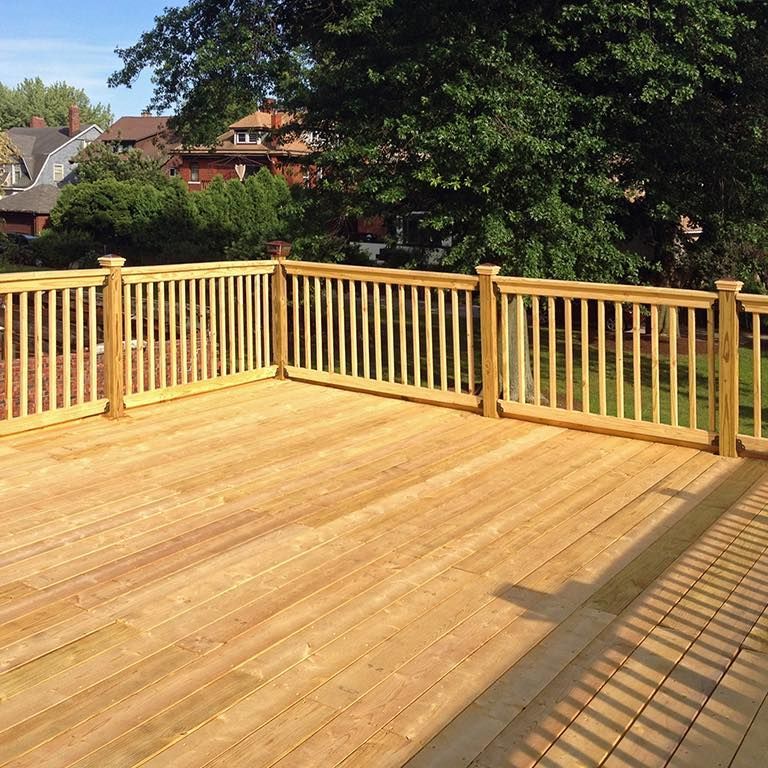
Dinges Quality Carpentry designs and builds custom decks for homeowners in Southwest, IA who need outdoor living space that connects to the home, provides room for seating or dining, and holds up to weather without warping, splitting, or loosening. You may have a back door that opens to a steep grade, an old deck with soft boards and wobbly railings, or no outdoor space at all beyond a small concrete stoop. Deck construction involves planning the layout, setting footings below the frost line, framing with properly spaced joists, and installing decking material that is fastened securely and finished to resist moisture and UV exposure.
The scope of deck design and construction includes layout planning to fit the yard and intended use, footing installation that meets local frost depth requirements, framing with treated lumber sized to span without bounce, decking installation with consistent gaps for drainage, railing systems that meet code height and spacing, and stairs that provide safe access to grade level. Decks can be single-level or multi-level, wrap around corners, or include features such as skirting, built-in benches, or planters. The result is outdoor space that feels like an extension of the home, provides a stable surface for furniture and grills, and does not require constant maintenance to remain safe and usable.
If your home in Southwest, IA needs a new deck or replacement of an existing structure that is no longer safe, contact Dinges Quality Carpentry to discuss design options and material choices.
How Deck Construction Ensures Long-Term Durability
Deck construction begins with site layout and footing placement, using string lines and levels to establish the height and position of each post. Footings are dug to the required depth and poured with concrete, and posts are set plumb and braced until the concrete cures. Beams are bolted to posts, and joists are hung with galvanized hangers spaced according to the decking material being used, with closer spacing required for composite boards than for solid lumber. Ledger boards are lagged into the house framing, not just siding, and flashing is installed to direct water away from the connection point. Decking is fastened with hidden clips or galvanized screws, and each board is checked for crown and straightness before installation.
After deck construction is complete, you will notice that the surface is level, that boards do not shift or squeak underfoot, and that railings feel solid when you lean against them. Stairs are uniform in height and depth, making them safer to use in dim light or when carrying items. Dinges Quality Carpentry ensures that every structural connection is secure, that drainage is planned to prevent standing water, and that all fasteners and hardware are rated for outdoor use to prevent rust and failure.
Deck construction also includes options for upgrades and expansions, such as adding a second level, extending the deck around a corner, or replacing railings and decking while keeping the existing frame if it is still structurally sound. Work that is not included in standard deck projects includes landscaping, grading, or electrical wiring for lights and outlets, though coordination with those trades is part of the planning process when needed.
What to Know About Deck Projects
Homeowners in Southwest, IA often ask about material options, timelines, and what happens during the construction process.
What is the difference between pressure-treated and composite decking?
Pressure-treated decking is solid wood treated with preservatives to resist rot and insects, while composite decking is made from wood fiber and plastic, offering lower maintenance but requiring closer joist spacing and specific fastening methods.
How deep do deck footings need to be in Southwest, IA?
Deck footings need to be placed below the frost line, which varies by region but is typically at least 36 inches deep to prevent heaving during freeze-thaw cycles.
When do deck railings need to be replaced separately?
Deck railings need replacement when posts loosen, balusters crack or break, or when the railing system no longer meets code requirements for height and spacing, even if the deck surface is still sound.
Why do deck boards need gaps between them?
Deck boards need gaps to allow water and debris to drain through, to provide space for expansion and contraction with temperature changes, and to prevent rot by allowing airflow beneath the surface.
What should I plan before deck construction starts?
Plan the deck size, location, and access points, decide whether you want railings on all sides or only where required by code, and confirm that the yard is accessible for materials and equipment delivery.
Dinges Quality Carpentry completes deck design and construction in Southwest, IA with attention to structural integrity and long-term performance. If you are ready to build a new deck, expand an existing one, or replace failing components, call to schedule a site review and estimate.